We all know the drill. You’ve finally replaced the sofa; the old one sits in the hallway, making the house feel half its size, and someone in a local Facebook group will take it away for forty quid, cash, this afternoon.
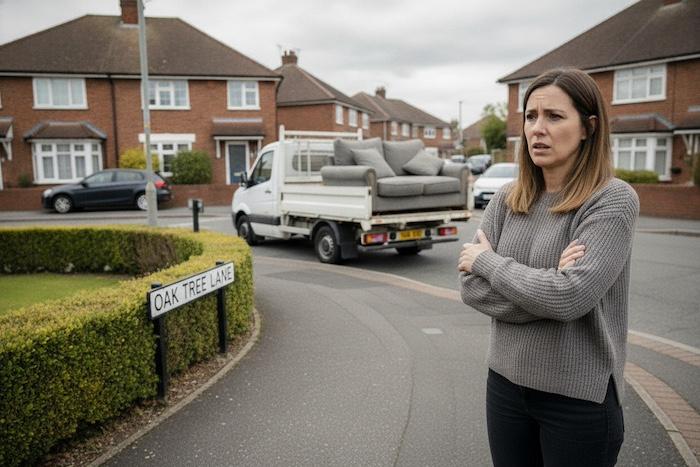
He turns up in a van, loads it, waves, and drives off. Sorted. Then, a few weeks later, a letter arrives from the council because your sofa was found dumped in a lay-by twenty miles away, and an envelope with your address on it was in the same pile.
This happens more often than you’d think, and what catches everyone out is who ends up paying. What many people don’t realise is that householders have a legal household waste duty of care when they hand their rubbish to someone else. If that waste is later fly-tipped, you could face a fine even if you weren’t the person who dumped it.
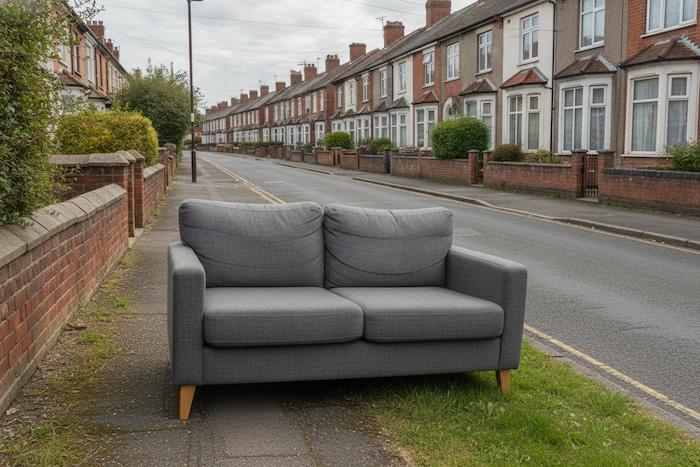
Paid Someone to Take Your Rubbish? What Happens If It’s Fly-Tipped
What Is the Household Waste Duty of Care?
Under section 34(2A) of the Environmental Protection Act 1990, anyone living in a domestic property in England has a legal duty to take all reasonable measures to make sure they only hand household waste to an authorised person.
The wording matters. The duty sits with you, not with the man in the van. It applies whether or not you knew what he intended to do with it. And saying “I paid someone to take it away” is not necessarily a defence, because paying someone to take it away is precisely the thing the household waste duty of care governs.
This is not a rare enforcement route, either. Of roughly 69,000 fixed penalty notices issued by councils in 2024/25, around 8,000 were specifically for household duty of care breaches. So if you’re paying someone to remove a sofa, mattress, garden waste or other household rubbish, it’s worth knowing exactly who you’re handing it to.
Which Route You Choose Changes Your Exposure
Handing bulky items to a man with a van is where things go wrong, because everything then depends on what that person does next.
Hiring a skip works differently, because the operator arranges the disposal rather than you handing waste to a driver. For example, under the skip hire terms easySkip publishes, the quoted price includes delivery, collection, and responsible disposal. That doesn’t switch off your household waste duty of care, mind you, and the Environment Agency’s public register of waste carriers is still worth two minutes, whoever you book with.
Your council’s bulky waste collection is the third route, and it’s often cheaper than a van, sometimes free, and about as documented as it gets.
Whichever option you choose, the important thing is being able to show you took reasonable steps to ensure an authorised waste carrier collected your household waste.

What “reasonable measures” actually means
The good news is that the bar is low and the check takes less time than making a cup of tea.
Before anyone takes waste away from your house, check them on the Environment Agency’s waste carrier register. You can search by business name, registration number or postcode; it’s free, and anyone collecting waste from your home for payment should appear in the upper tier. Take a screenshot of the result so you have a record of the check.
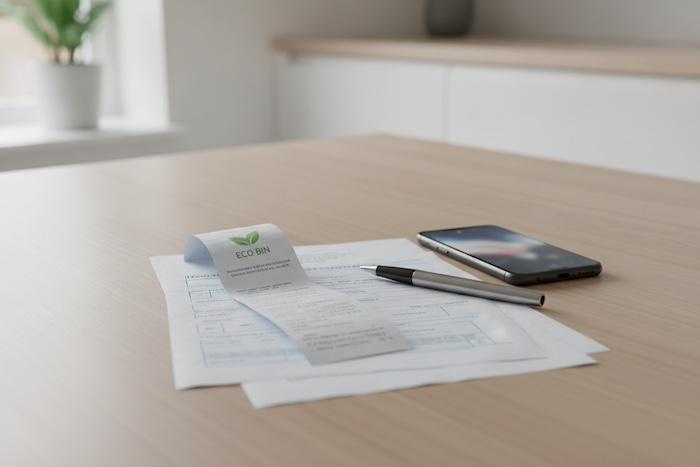
Then get something in writing: a receipt or waste transfer note with the carrier’s name and details, a description of what was taken, where it was collected from and where it’s going.
These simple records can show you took reasonable measures to comply with your household waste duty of care.
That paper trail is your defence. Councils rely on its absence when they come knocking.
What Is the Fine for Household Waste Duty of Care?
Councils can issue a fixed penalty notice for a household waste duty of care breach anywhere between £150 and £600. The maximum rose from £400 to £600 in July 2023, and each council sets its own level within that range. Nottingham, for instance, recently settled on £250, reduced to £200 if it’s paid within ten working days. Others go considerably higher.
If it goes to prosecution rather than a fixed penalty notice, the fine can be unlimited, and you’re left with a criminal record. For a sofa you paid forty pounds to get rid of.
One reported case makes the point better than any warning. Waste dumped in Wiltshire was traced back to an address in Croydon, and the householder was issued the full £600 because he couldn’t produce a name, vehicle details, a receipt or a transfer note. He hadn’t dumped anything. He simply had no record of who he’d handed it to.
It’s a useful reminder that being the person who physically fly-tipped the rubbish isn’t the only way you can end up facing enforcement action.
How Can Fly-Tipped Waste Be Traced Back to You?
This is what surprises people most, and it’s almost always the same thing.
Correspondence. A bank envelope, a delivery label, an old prescription bag, a name on a magazine wrapper. When a pile of waste is dumped, the first thing anyone looks for is paper with an address on it, and a single envelope is frequently enough to bring a duty of care investigation to your front door.
Councils also cross-reference bulky waste bookings, use CCTV and ANPR, and check social media listings. But it’s usually the envelope.
That is why keeping evidence of who collected your rubbish can matter if your waste is later found fly-tipped.
The two-minute version
If you’re paying someone to remove household waste, these are the simple steps worth taking:
- Check the carrier on the Environment Agency register before they load anything, and note the registration number.
- Get a receipt or waste transfer note with their details, and keep it for a couple of years.
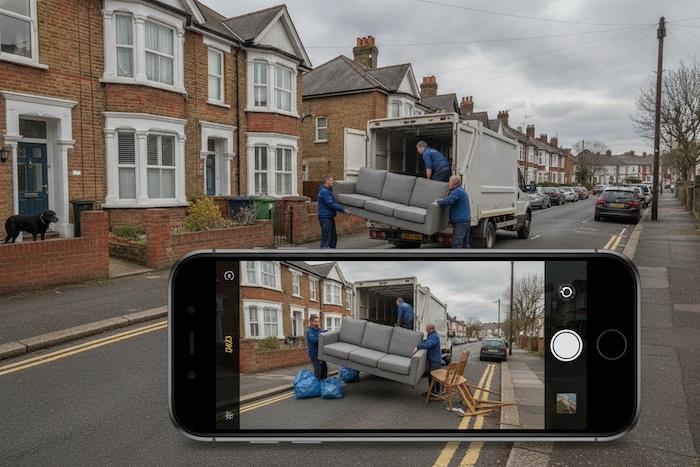
- Photograph the load and the van, including the number plate. It costs nothing, and it’s worth a great deal if anything goes wrong.
- Be wary of a price that seems too good. Legitimate waste disposal has a real cost attached, and if someone is charging far below everyone else, it’s worth asking where the waste is actually going.
- Keep your records in case the rubbish is later linked to illegal waste disposal or fly-tipping.
The bit worth holding onto
None of this means you can’t use a local person or a small business. Plenty of small operators are properly registered and completely straightforward, and checking takes seconds.
It just means the responsibility follows the waste back to you. Your household waste duty of care means you need to take reasonable steps to make sure the person collecting your rubbish is authorised to do so.
The only thing standing between you and someone else’s decision to dump your sofa in a lay-by could be a registration number you took thirty seconds to look up and a receipt you kept in a drawer.
I’d never given it a moment’s thought until I read about it. Now I check every time.
*Disclosure: Collaborative Post
Thanks for stopping by,
Love you all ❤️
Franca 💋
PIN FOR LATER


Leave a Reply