Food labels are becoming increasingly important as more people embrace healthier lifestyles and want to make informed food choices. Food labels are your first line of defence against poor nutrition, helping you make informed decisions about the foods you eat. They offer a vast array of information, including daily values of fundamental nutrients, calorie counts, and ingredient lists.

Reading and understanding these labels can often be a confusing task for many, but don’t worry, we’ve got your back. These are the key details you should be aware of when you’re assessing food labels.
What to Look for When Checking Food Labels
Importance of Serving Size
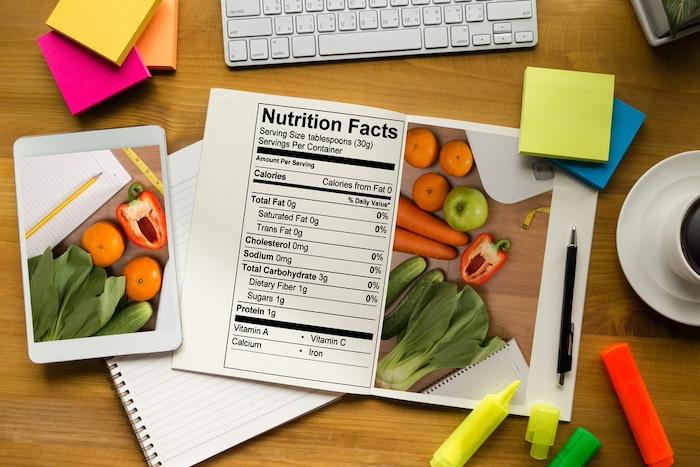
Firstly, you have to understand the serving size and the number of servings in the container. The serving size is shown at the top of the Nutrition Facts panel. It is crucial because all the nutrition information provided on the label is based on one serving. And here is the catch: A food package may contain more than one serving, yet we often consume the entire package thinking it to be just one serving. Misinterpreting the serving size can lead us to consuming more calories, sugar, sodium, and other nutrients than we realise. So, be sure to make a mental note of the serving size first.
Calorie Count and Other Nutrients
Next, the label section will provide information on “calories” and “calories from fat.” Be cautious not to overlook this part since observing your calorie intake is vital to weight maintenance or loss. Most adults need about 2000 to 2500 calories a day. If you are trying to lose or maintain weight, opt for foods with a lower calorie count.
After calories, the label moves on to nutrients. As a rule of thumb, aim to limit your intake of fats, cholesterol, and sodium, as excessive amounts of these nutrients can lead to various health problems like heart disease and high blood pressure. Nutrients mentioned further down the label, like fibre, vitamins, and minerals, are ones you’ll want to get plenty of. Opt for foods rich in these nutrients to promote good health.

Ingredients List
The ingredients list is another vital piece of information. Ingredients are listed in descending order by weight, which means the ingredients used most are listed first. Watch out for foods where sugars, sodium or fats are listed at the start of the ingredient list. Be aware that sugars can be listed under multiple names, including corn syrup, sucrose, dextrose, or fructose, among others, which can make them challenging to spot.
Check for Allergens
If you or a family member has food allergies, always check for allergens listed on the food label. Food allergens, such as milk, eggs, nuts, wheat, soy, fish, and shellfish, must be declared on food packaging as per the Food Allergen Labelling and Consumer Protection Act. It’s vital to read labels attentively to prevent allergic reactions.
% Daily Value (%DV)
Last but not least is the % Daily Value, which tells you the percentage of each nutrient in a single serving relative to the recommended daily amount. For instance, if the label lists 15% for calcium, it means that one serving provides 15% of the calcium you need each day. Use the %DV to compare products and choose ones that best fit your dietary needs.
Conclusion
In the end, how we benefit from food labels boils down to our understanding and application of the information available. Once mastered, labels can turn an average consumer into a savvy shopper who is well informed about the foods they consume, leading to a healthier, more balanced diet. After all, we are what we eat. Therefore, it’s worth investing a little time into this skill – for better health and quality of life.
*Disclosure: Collaborative Post
Thanks for stopping by,
Love you all ❤️
Franca 💋
PIN FOR LATER

Leave a Reply