For most of the last century, nobody thought about choosing a radiator. Many people got what the building had, usually under the window, painted whatever the walls were, and arranged the room around it.
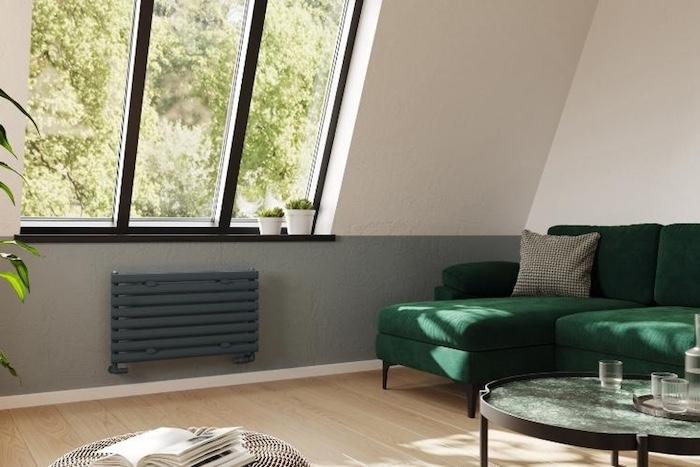
This is no longer true. Modern radiators have quietly become one of the more interesting design decisions in a British interior. You can now treat a radiator as a design choice, much like a tap or light switch. The decision is fairly simple: do you want it to stand out or blend into the background? Both approaches can work well. When you get this wrong, the radiator sits somewhere in between, leaving the room feeling unfinished.
Radiators as a Design Decision: When to Choose a Statement Piece or a Flat Panel
Why Victorian Radiators Were Designed As Ornaments
The cast-iron column radiator arrived as a technology worth showing off. Central heating in a private house was a statement about money and modernity, much like an early telephone, and the object was styled to match.
The decorative language followed the rest of the room. Columns, beading, moulded feet, sat alongside the cornice and the fire surround as part of one scheme. It was never meant to be hidden away because hiding it would have defeated the point of having it.
How the Post-War Panel Gave Radiators a Bad Name
What did happen was a long middle period that nobody defends. The pressed-steel panel of the post-war decades was designed to be cheap and quick to produce, which was the right priority for the houses built then. The result was bulky, ribbed and slightly institutional, usually magnolia with a shelf above it holding things that blocked the heat.
This is the radiator most British people picture when they hear the word, and it’s why so many assume the only options are to box it in or ignore it. This resulted in an entire generation of interiors designed around working past the heating rather than with it.
Why the Radiator Became a Design Choice Rather Than an Afterthought
Two things changed at roughly the same time. Manufacturing improved to the point where both extremes became genuinely available. A slim flat-fronted panel that still heats a room properly, and sculptural designs that work as objects rather than compromises. And the taste of British homeowners also evolved, so a pared-back new-build flat and a maximalist Victorian conversion are now equally normal.
This has made radiators a real decision, not an afterthought, when planning other aspects of interior design. This is the actual shift, and it’s more interesting than the idea that radiators simply got plainer.
When a Statement Radiator Earns Its Place in the Room
A radiator is worth making visible when the room needs somewhere for the eye to land and nothing currently doing that job.
Hallways are the obvious case. They’re usually narrow, short of furniture, and the first thing anyone sees. An anthracite vertical or a polished finish does real work there, because the alternative is a corridor with nothing in it.
Period rooms are another good example. A column radiator can suit a Victorian terrace because its proportions match the room’s scale. By contrast, a small flat panel can look out of place on a large wall beneath a high ceiling.
Colour and finish matter too. If you’ve committed to a particular palette, matching the radiator to it makes the whole scheme feel considered. A standard white radiator that ignores the surrounding colours can look more like a default choice than a design element.
When a Flat Panel Radiator Is the Right Design Decision
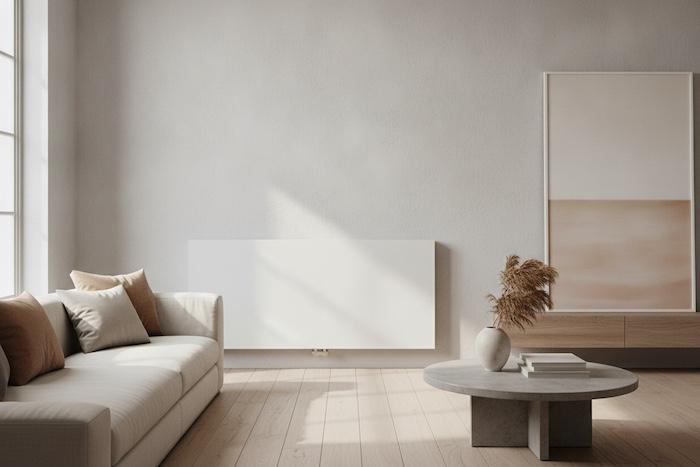
The opposite approach can be just as intentional, and it’s more common in newer homes. If a room already has plenty of visual interest from artwork, bold paint colours, open shelving or statement furniture, an eye-catching radiator can make the space feel too busy. A flat-fronted panel keeps things simple. It sits close to the wall, creates little shadow, and lets other features in the room take the focus.
This isn’t a compromise. A simple, flat radiator is just as much of a design choice as a more decorative style, and it often works well with contemporary interiors. It’s also a practical option for smaller rooms, where a radiator that projects further from the wall can get in the way.
How to Size a Panel Radiator Correctly Before You Choose a Style
Whichever direction you go, one thing matters more than the styling, and most people skip it.
A radiator has to be sized to the room. Heat output is measured in BTUs, and what you need depends on the room’s dimensions, glazing, insulation, and what sits above and below it. If your radiator is too small, it won’t warm the room effectively.
Stated outputs across the market aren’t always reliable, because a figure produced under generous test conditions isn’t the figure you get at a normal flow temperature. This is why it’s worth considering independently verified radiator heat outputs from reputable suppliers.
UK Radiators has its panel radiators third-party tested, so the stated BTU reflects what the radiator actually delivers. They also provide a BTU calculator so you can work out what a given room needs before committing to a size or a shape. Their radiators carry up to a 25-year warranty and are salt-spray tested for 200 hours, which matters more than it sounds in a bathroom or a coastal flat.
How Vertical Radiators Changed Where Furniture Goes in Small Flats
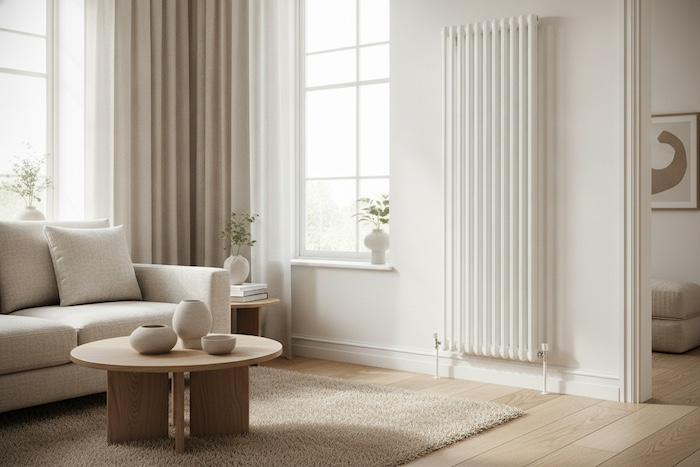
This matters because it affects layout, not just looks. For most of the last century, the radiator went under the window, which meant that wall was spoken for. Vertical formats changed the arithmetic. Put the heat on a narrow strip of wall, often beside a door or in an alcove doing nothing, and you free the rest of the wall for a sofa or a bed.
In flats, where the constraint is usually wall length rather than floor area, this is a meaningful gain, and a good deal of contemporary British flat planning quietly depends on it.
What Your Radiator Choice Says About the Rest of the Room
A more useful way to think about it is to consider what the room needs, rather than simply comparing plain and decorative radiators. If the space already has plenty of visual interest, a simple radiator can sit quietly in the background. If the room lacks a focal point, the radiator can fill that role while still serving a practical purpose.
The biggest change is that homeowners now have more reason to think about how a radiator fits into a room. For much of the twentieth century, people treated radiators as purely practical features. That’s why many British homes still have radiators that feel like an afterthought rather than part of the overall design.
*Disclosure: Collaborative Post
Thanks for stopping by,
Love you all ❤️
Franca 💋
PIN FOR LATER

Leave a Reply