The wedding band looked lovely online, and it still does on your hand. Then you slide your engagement ring beside it and notice a gap you hadn’t planned for. Suddenly, that small space is all you can see. A bezel engagement ring gap can be more noticeable with some wedding band designs, but it doesn’t mean you have to compromise on the style you love.
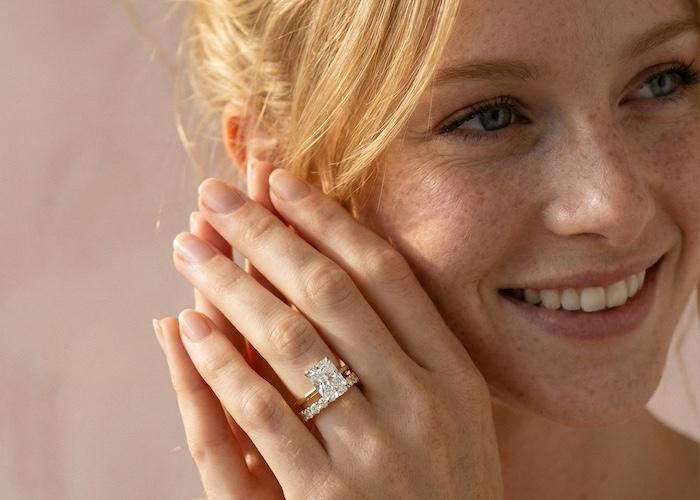
A wedding band does not have to sit flush against your engagement ring. If you notice a gap between a bezel engagement ring and a wedding band, it doesn’t necessarily mean the pairing is wrong. A visible gap can be part of a pair you enjoy wearing. The useful questions are whether you like the arrangement, whether it feels comfortable and where the two rings actually touch.
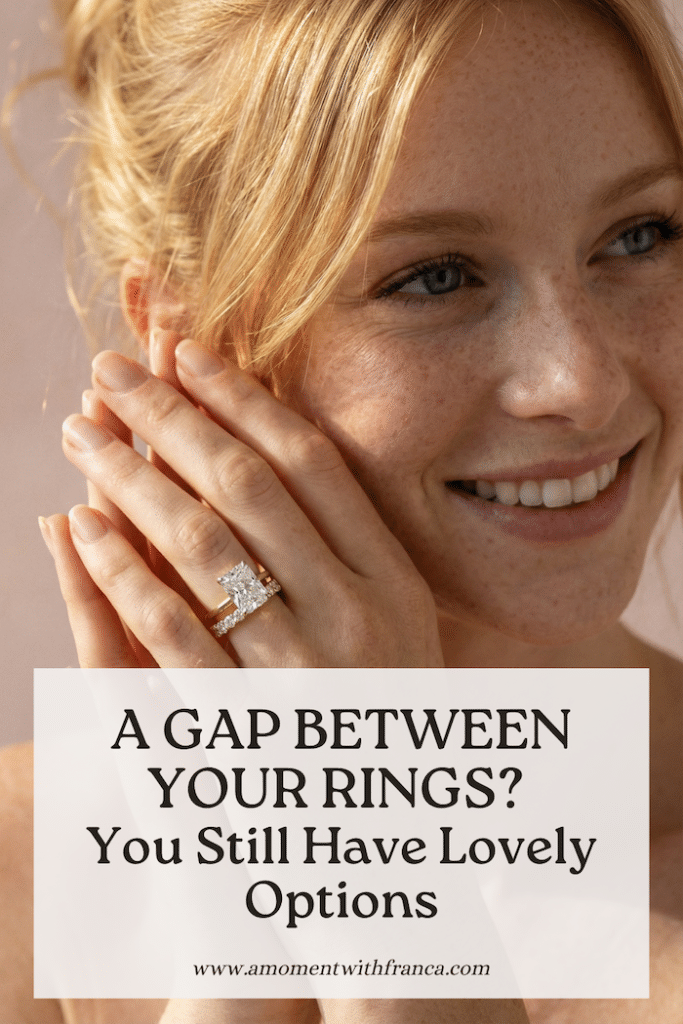
A Gap Between Your Rings? You Still Have Lovely Options
Look underneath the stone to understand a bezel engagement ring gap
A bezel engagement ring holds the stone within a metal rim. That describes how the stone is secured; it does not tell you how much room there is beneath the centre setting for another ring. The metal supporting the bezel, rather than its visible rim, may stop a straight wedding band from sitting close.
Lily Arkwright’s bezel ring styles include Margot, a pear-shaped lab-grown diamond solitaire in 18ct white gold. The product is described as wedding-ring friendly and compatible with most standard wedding bands. That doesn’t guarantee a flush fit with every design, so compare the exact rings you intend to wear.
Look from the side as well as from above. Ask the jeweller to show you what creates the space, whether there is room for the band you want and whether the two designs are suitable to wear together. You may discover that you need a different band profile, or that you are quite happy with the gap.
Try three arrangements before ruling anything out
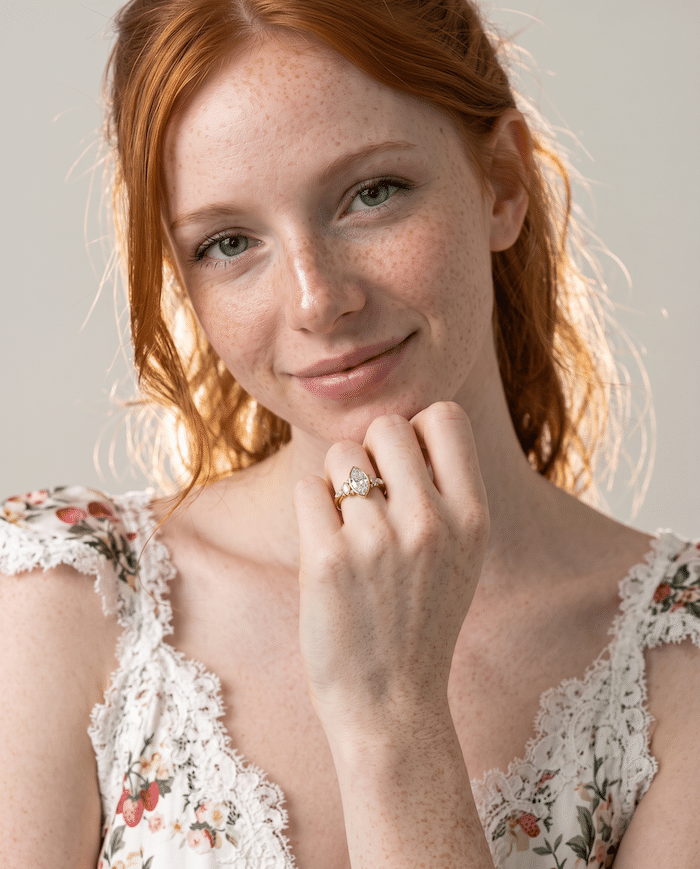
Start with a straight band, even if it leaves a little space. Its uninterrupted line may be exactly what you liked in the first place. Compare a narrower and a broader version, noticing how each changes the balance beside the bezel’s metal outline. Comparing different band profiles can help you decide whether to minimise the gap between your bezel engagement ring and wedding band or embrace it as part of the overall look.
Next, try a curved or chevron band. A gentle curve can follow the bezel’s outline; a chevron adds a more pointed shape. Neither guarantees a flush fit. Even a curve that looks close from above may meet the setting underneath, so check the actual pair from the side. Notice whether any diamonds on the wedding band crowd the bezel’s metal border.
Finally, try the wedding band on one hand and the engagement ring on the other. Have the intended finger measured rather than assuming it takes the same size. Separating them lets you enjoy each ring’s shape without forcing the outlines to match.
Take a photograph of each arrangement from a similar distance. Keep your hand relaxed rather than arranging the rings into a position they will not hold during wear. The comparison is more useful when it shows the way they naturally sit.
Let the jeweller check the contact points
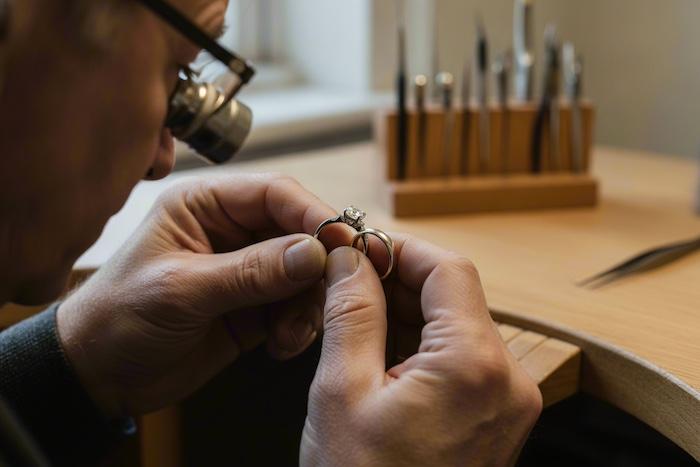
A neat-looking pair still needs a physical check. GIA’s guide to stacking rings notes that wearing rings together can increase scratches and wear. Ask the jeweller to examine the pair from both sides and underneath, including any contact between a stone, its setting and the neighbouring band.
A gap visible at the front does not show every contact point. Equally, two rings touching is not enough on its own to tell you how they will wear. Let the jeweller assess the actual construction and explain any precautions or inspections the pair needs.
If a spacer band is suggested, ask what it is intended to separate. It introduces new contact surfaces as well as another ring on your finger. Have the jeweller check the complete three-ring combination for contact and comfort.
Give the wedding band a few minutes of its own
If you expect to wear the wedding band on its own, try it without the engagement ring. A fitted curve may look lovely in the pair but should still appeal to you on its own.
Then have the fit assessed while wearing both. GIA notes that stacking rings can make the fit tighter, so don’t assume two comfortable individual rings will feel the same together.
Keep the detail you liked in the first place
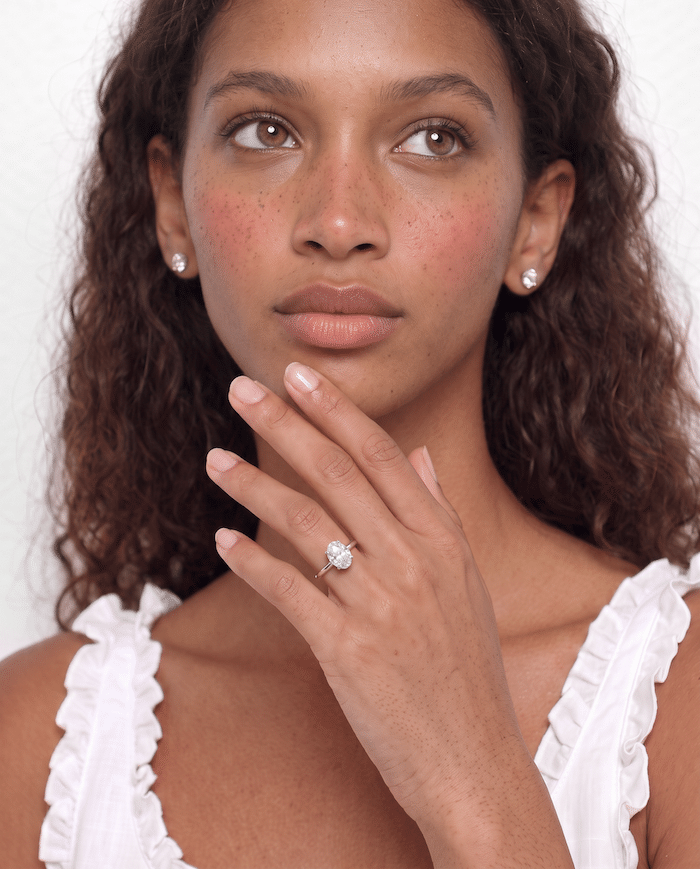
The personal meaning of jewellery can come from a detail you simply enjoy wearing. Before changing your shortlist, remember what attracted you to the wedding band: a rounded edge, a plain line of gold or a small row of diamonds.
Ask to compare that feature in the arrangements you have tried. If a shaped band gives you the close fit you want and still feels right on its own, that may be enough to settle it. If you keep returning to the straight band, there is room to choose it with a visible gap.
Leave the appointment with rings you look forward to wearing. A little daylight between them can belong in the picture too.
*Disclosure: Collaborative Post
Thanks for stopping by,
Love you all ❤️
Franca 💋
PIN FOR LATER

Leave a Reply